Health sector — Dera Ghazi Khan Division
Four districts — Dera Ghazi Khan, Rajanpur, Muzaffargarh, and Layyah — facility overview, major DHQ hospitals, and Punjab health budget context.
Facilities (division total)
Total1,050+Dera Ghazi Khan Division has a total of 1,050+ hospitals and health facilities across its 6 districts.
Listed categories sum: 824 · Remaining units bring total to 1,050+.
Major categories below sum to 824; additional primary and auxiliary units bring the full census to 1,050+ (per division reporting). Unlisted / other: 226+.
This data is for the entire Dera Ghazi Khan Division (6 districts).
Facility breakdown by type and district
| Facility type | Division total | D.G. Khan | Rajanpur | Muzaffargarh | Layyah | Taunsa | Kot Addu |
|---|---|---|---|---|---|---|---|
| DHQ Hospitals | 06 | 01 | 01 | 01 | 01 | 01 | 01 |
| THQ Hospitals | 18 | 04 | 03 | 04 | 03 | 02 | 02 |
| RHCs (Rural Health Centers) | 48 | 10 | 08 | 12 | 06 | 07 | 05 |
| BHUs (Basic Health Units) | 410 | 78 | 65 | 102 | 52 | 63 | 50 |
| Govt. Rural Dispensaries | 120 | 22 | 18 | 32 | 15 | 18 | 15 |
| MCH Centres (Mother & Child Health) | 82 | 16 | 12 | 20 | 10 | 14 | 10 |
| Sub Health Centers | 140 | 26 | 20 | 38 | 16 | 22 | 18 |
| Sum of categories (listed) | 824 | — | — | — | — | — | — |
Division-wide facility total: 1,050+. Ranges and approximations reflect district-profile and South Punjab health-sector reporting.
Facility Types — Division Counts
BHUs by District
Muzaffargarh has the highest BHU count in the division.
RHCs by District
District Headquarters Hospital (DHQ) Dera Ghazi Khan
500+ up to 750 beds tertiary care facility; primary referral centre for southern Punjab with persistent patient overload. Authorized 750 beds (≈650 operational). Serves Dera Ghazi Khan Division including Rajanpur, Taunsa, and adjoining Balochistan regions.
Bed breakdown (major wards)
Surgical 110, Medical 180, Gynecology 90, Pediatrics 100, Emergency/Trauma 140, ICU/CCU 50 — plus ENT, Eye, TB/Chest, Orthopedics, Dialysis, and specialized isolation units.
25+ departments
General Medicine (2 units), General Surgery (2 units), Gynecology & Obstetrics, Pediatrics, Cardiology, Orthopedics, Ophthalmology, ENT, TB/Chest Diseases, Dermatology, Psychiatry, Urology, Nephrology, Gastroenterology, Neurology, Pulmonology, Emergency Medicine, Anesthesia.
Support / specialized (10+)
Radiology (CT/MRI/X-Ray), Pathology/Laboratory, Pharmacy, Blood Bank, Dialysis (18 machines), Operation Theatres (7), Labor Room, Physiotherapy, Burn Unit, Isolation Wards (COVID/Dengue).
Administrative / ancillary
Admin Block, Medical Teaching Units (affiliated with Ghazi Khan Medical College), Records Management, Kitchen/Laundry, Mortuary.
Key stats: ~1,000 OPD patients daily, ~220 IPD admissions, ~4,000 surgeries annually; specialist shortages and medicine stock constraints periodically reported. In short: 750 authorized beds (650 operational), 25+ departments, Medicine 180 beds, Surgery 110, Emergency 140, ICUs 50; high regional referral burden across southern Punjab.
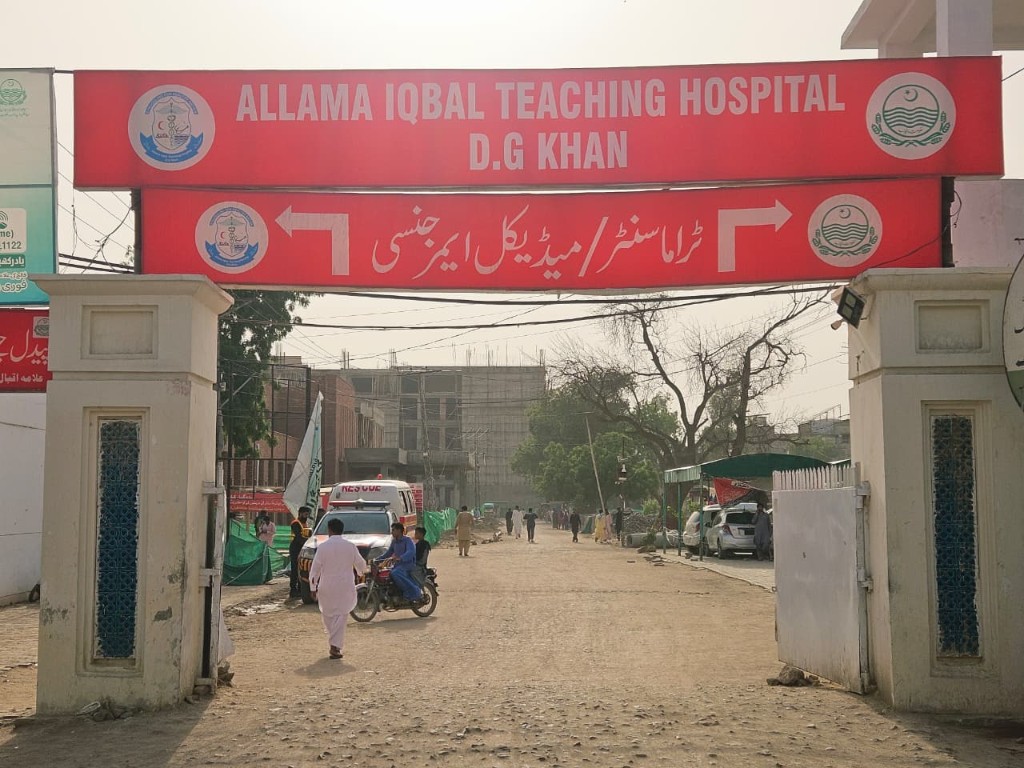
DHQ Hospital Dera Ghazi Khan
Main tertiary care facility for Dera Ghazi Khan District (~2.4 million population) and major referral centre for Taunsa, Kot Chutta, and tribal belt.
Key information
- Established: 1970s (expanded in phases; major upgrades 2000s–2020s)
- Bed strength: 500–750 (≈650 operational)
- Location: Dera Ghazi Khan City
- Annual OPD: ~900,000–1,200,000
- Doctors: ~70–90 specialists
- Nursing staff: ~120–160
Major wards & facilities
- Emergency (24/7), Medicine, Surgery, Gynecology, Pediatrics
- Orthopedics, ENT, Ophthalmology, Dermatology
- ICU, CCU, Burn Unit, Isolation wards
Diagnostic & support
- CT scan, X-ray, ultrasound, ECG
- Blood bank, pathology lab, pharmacy
- Dialysis (limited capacity), multiple operation theatres
Special features
- Major trauma hub (N-55 highway)
- High rural + tribal referral load
- Teaching hospital linked with Ghazi Khan Medical College
DHQ Hospital Muzaffargarh
Main secondary care facility for Muzaffargarh District (~4.5 million population).
Key information
- Established: 1980s
- Bed strength: ~400–600 (≈500 operational)
- Location: Muzaffargarh City
- Annual OPD: ~800,000+
- Doctors: ~80+ specialists
- Nursing staff: ~150+
Major wards & facilities
- Emergency (24/7), Medicine, Surgery, Gynecology, Pediatrics
- Orthopedics, ENT, Eye, Dermatology
Diagnostic & support
- Laboratory, CT scan, X-ray, ultrasound
- Blood bank, pharmacy, basic ICU
Special features
- High patient burden due to dense population
- Flood-prone catchment area (Indus belt)
- Heavy maternal and pediatric caseload

DHQ Hospital Rajanpur

Main secondary care facility for Rajanpur District (~2.5 million population).
Key information
- Established: 1990s
- Bed strength: ~200–300 (≈250 operational)
- Location: Rajanpur City
- Annual OPD: ~500,000–700,000
- Doctors: ~40–60 specialists
- Nursing staff: ~80–100
Major wards & facilities
- Emergency (24/7), Medicine, Surgery, Gynecology, Pediatrics
- Basic Orthopedics and stabilization units
Diagnostic & support
- Basic lab services, X-ray, ultrasound
- Limited CT access (referred to DG Khan)
- Pharmacy and blood storage unit
Special features
- High rural + desert belt dependency
- Frequent flood emergency response area
- Severe specialist shortages
DHQ Hospital Layyah
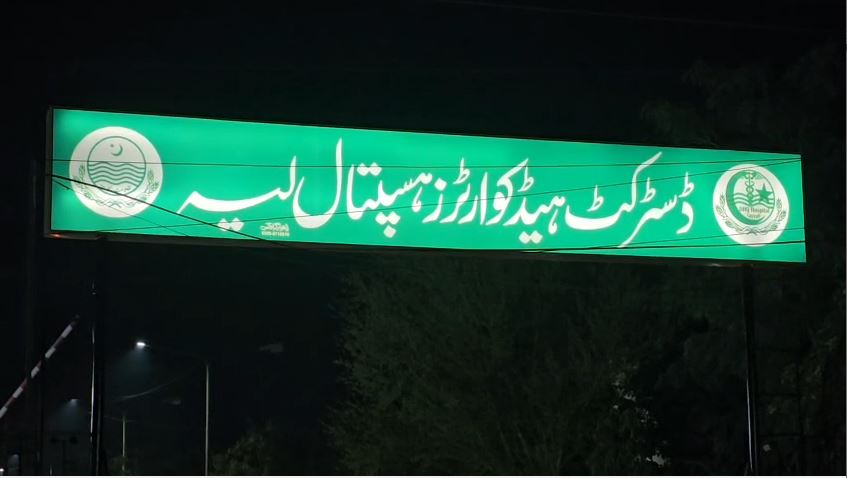
Main secondary care facility for Layyah District (~3.0 million population).
Key information
- Established: 1980s–1990s
- Bed strength: ~300–400 (≈350 operational)
- Location: Layyah City
- Annual OPD: ~700,000–900,000
- Doctors: ~60–80 specialists
- Nursing staff: ~120–140
Major wards & facilities
- Emergency (24/7), Medicine, Surgery, Gynecology, Pediatrics
- Orthopedics, ENT, Eye services
Diagnostic & support
- CT scan, X-ray, ultrasound
- Pathology lab, blood bank, pharmacy
- Basic ICU services
Special features
- Relatively better literacy among division districts
- Strong agriculture-based patient population
- Serves Thal desert fringe areas
Punjab health budget (context)
| Item | Amount |
|---|---|
| Punjab health sector (total) | Rs. 630.5B |
| Development (ADP) | Rs. 181–182B |
| Non-development (Non-ADP) | Rs. ~450B |
| District-level hospitals (allocation band) | Rs. 50–70B+ |
The division receives its proportional share from these provincial envelopes for facility upgrades, revamping, and service delivery across D.G. Khan, Rajanpur, Muzaffargarh, Layyah, Taunsa, and Kot Addu.
Note: Dera Ghazi Khan Division facilities are managed under Punjab Primary & Secondary Healthcare and Specialized Healthcare departments. Data is compiled from division health-sector reporting and South Punjab district profiles (figures are approximate/latest reported and may vary with ongoing upgrades). High patient loads, specialist shortages, and medicine stock constraints remain common challenges across DHQs.